

Conflicts to Watch in 2026
About the Preventive Priorities Survey
For the past eighteen years, the Center for Preventive Action (CPA) has surveyed American foreign policy experts to assess the risk posed to U.S. national interests by ongoing and emerging sources of armed conflict around the world.
U.S. foreign policy experts rank the thirty global conflicts that could most significantly affect the United States in 2026.
The logic of this exercise is straightforward: U.S. policymakers often find themselves blindsided by conflict-related crises that divert attention and resources away from other priorities and even lead to major military interventions that cost American lives. Those involved frequently lament afterward that officials should have done more to avert or prepare for these crises. Thus, the purpose of the Preventive Priorities Survey (PPS) is not just to alert busy U.S. policymakers to incipient sources of instability over the next twelve months but also to help them decide which are most pressing.
The need for U.S. policymakers to look ahead and actively lessen conflict-related risks grows every year. The world has undeniably become more violent and disorderly. Indeed, the number of armed conflicts is now at its highest since the end of World War II. An increasing proportion of those, moreover, are interstate conflicts, reversing a post–Cold War trend. The United States is uniquely exposed to the growing risk of armed conflict, as no other power has as many allies and security commitments.
The second Trump administration has sought to end many ongoing conflicts, such as those in the Democratic Republic of Congo, the Gaza Strip, and Ukraine, as well as between India and Pakistan and Cambodia and Thailand. At the same time, however, it has engaged in unnecessarily destabilizing behavior, specifically threatening force and other coercive measures against several countries, including allies, notably in the Western Hemisphere. Regrettably, it has also systematically dismantled the very elements of the U.S. government dedicated to strategic foresight, conflict prevention, and peace-building without replacing them with anything better. Related funding has been slashed in the process. Those actions are both counterproductive and shortsighted.
U.S. policymakers often find themselves blindsided by conflict-related crises. Those involved frequently lament afterward that officials should have done more to avert or prepare for these crises.
Hopefully, the Trump administration will reverse course in the coming months by no longer alienating important allies and partners, while giving more emphasis to upstream efforts known to promote peace and stability, particularly in areas important to the United States. The findings of this year’s PPS can help in that regard.
The PPS asks experts to assess only relatively discrete political and military contingencies—thirty, to be precise—that have been judged during an initial crowdsourcing effort as plausible in the coming twelve months. It is not designed, therefore, to evaluate the risk posed by broad trends such as global warming, demographic change, or technological developments. Those trends, which could easily trigger violent conflict, are simply too difficult to judge over a short time frame. Nor does the PPS attempt to appraise the risk associated with events such as earthquakes, severe weather, public health crises, or the death of a specific leader. Those events can trigger instability, but their likelihood is inherently unpredictable. Respondents are given the opportunity, however, to identify additional conflict-related concerns they believe warrant attention. Those suggestions appear in the list of “Other Noted Concerns.”
This year, the survey contained a new feature: respondents were asked to share what they believe are promising opportunities for both averting and managing conflict around the world. The leading results are discussed separately in the “Opportunities for Conflict Prevention and Resolution” section.
Finally, the results reflect expert opinion at the time the survey was conducted in November 2025. The world is ever-changing, so geopolitical risk assessments need to be regularly updated. CPA does this with its award-winning “Global Conflict Tracker” interactive.
Methodology
The Center for Preventive Action carried out the 2026 PPS in three stages:
1. Soliciting PPS Contingencies
In October 2025, CPA harnessed various social media platforms to solicit suggestions about possible conflicts to include in the survey. With the help of the Council on Foreign Relations’ in-house regional experts, CPA narrowed down the list of possible conflicts to thirty contingencies deemed both plausible in 2026 and potentially harmful to U.S. interests.
2. Polling Foreign Policy Experts
In November 2025, the survey was sent to approximately 15,000 U.S. government officials, foreign policy experts, and academics, of whom approximately 620 responded. Each was asked to estimate the impact on U.S. interests and likelihood of each contingency according to general guidelines (see risk assessment matrix definitions).
The survey results were then scored according to their ranking, and the contingencies were subsequently sorted into one of three preventive priority tiers (I, II, and III) according to their placement on the accompanying risk assessment matrix.
Risk Assessment Matrix and Definitions
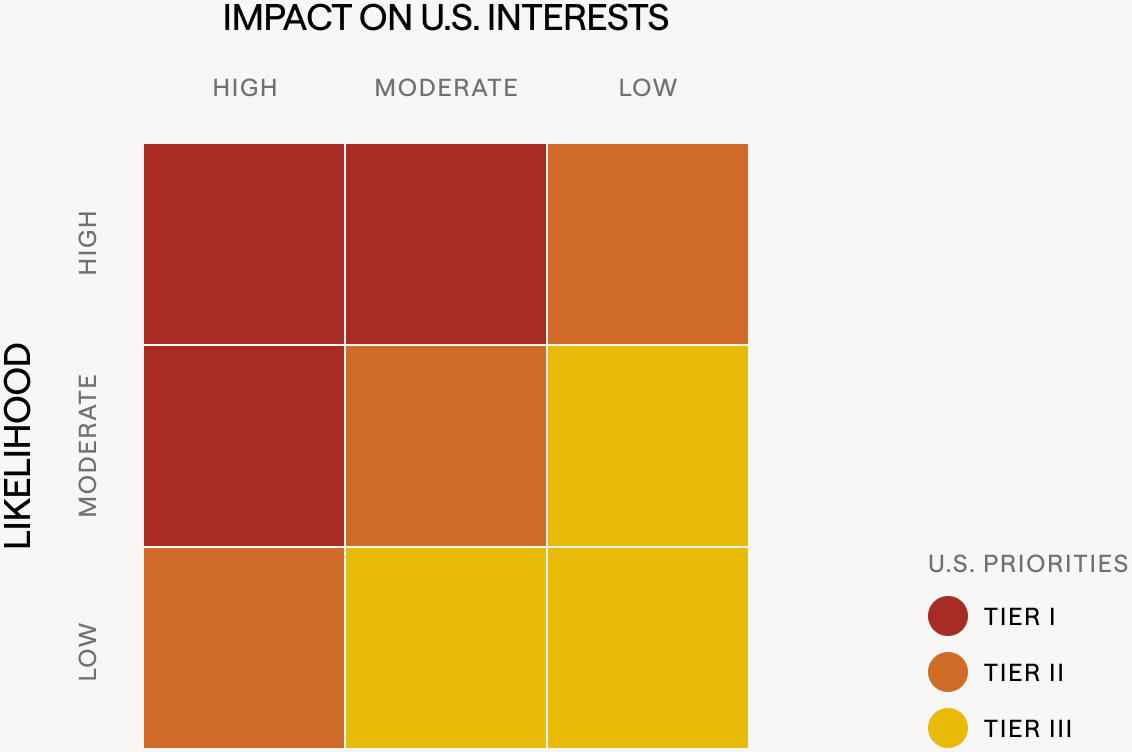
| Impact on U.S. Interests | Likelihood |
|---|---|
| High: contingency directly threatens the U.S. homeland, a defense treaty ally, or a vital strategic interest, and thus is likely to trigger a U.S. military response | High: contingency is probable to highly likely to occur in 2026 |
| Moderate: contingency indirectly threatens the U.S. homeland and/or affects a country of strategic importance to the United States that is not a defense treaty ally | Moderate: contingency has an even chance of occurring in 2026 |
| Low: contingency affects a country of limited strategic importance to the United States but could have severe/widespread humanitarian consequences | Low: contingency is improbable to highly unlikely to occur in 2026 |
Tier I
High Likelihood; High Impact
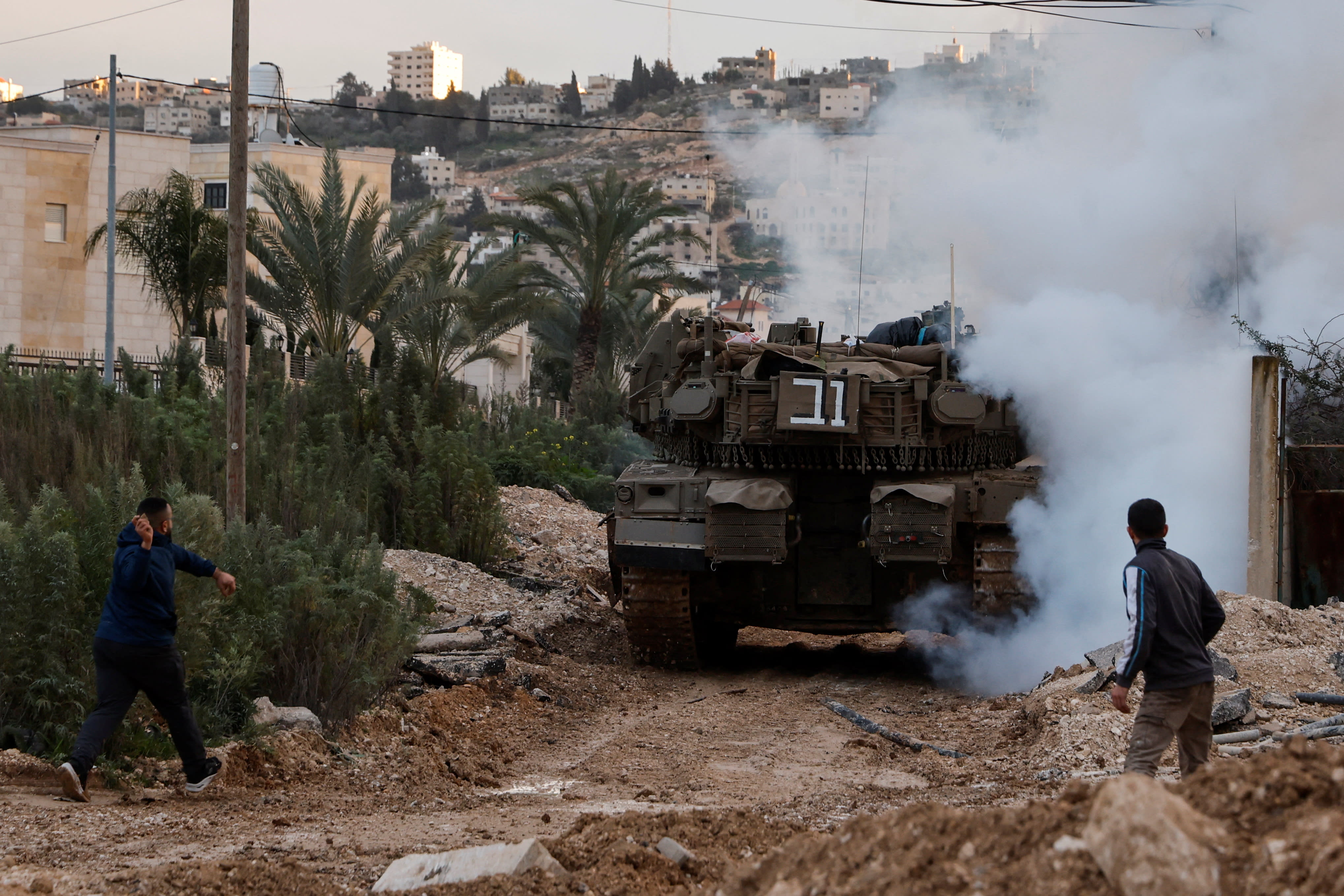
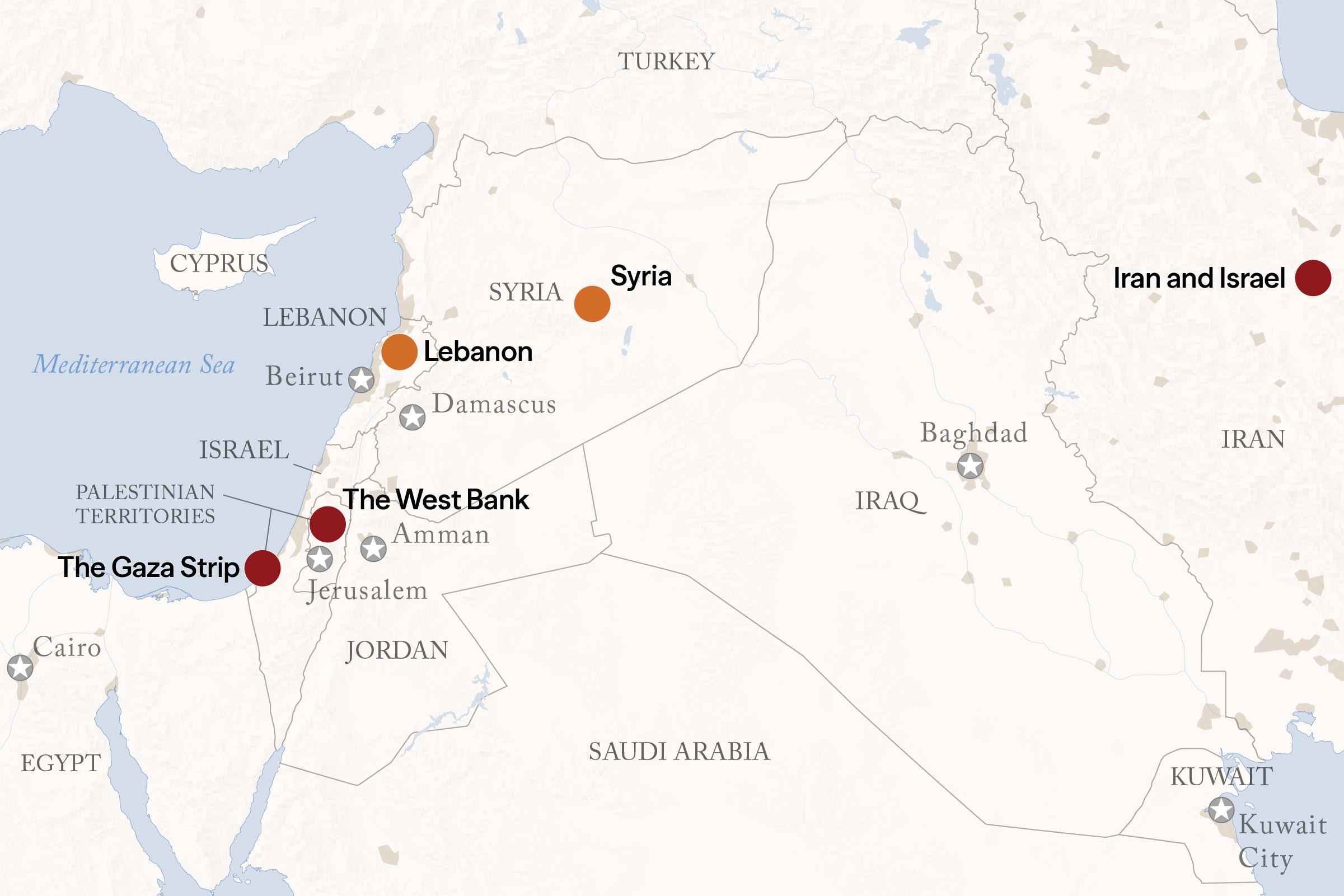
- Increased conflict between Israeli security forces and Palestinians in the West Bank over Israeli settlement construction, Palestinian political rights, and the war in Gaza
- Renewed fighting in the Gaza Strip, triggered by increasing clashes between Hamas militants and Israeli security forces, deepens the humanitarian crisis and exacerbates regional instability
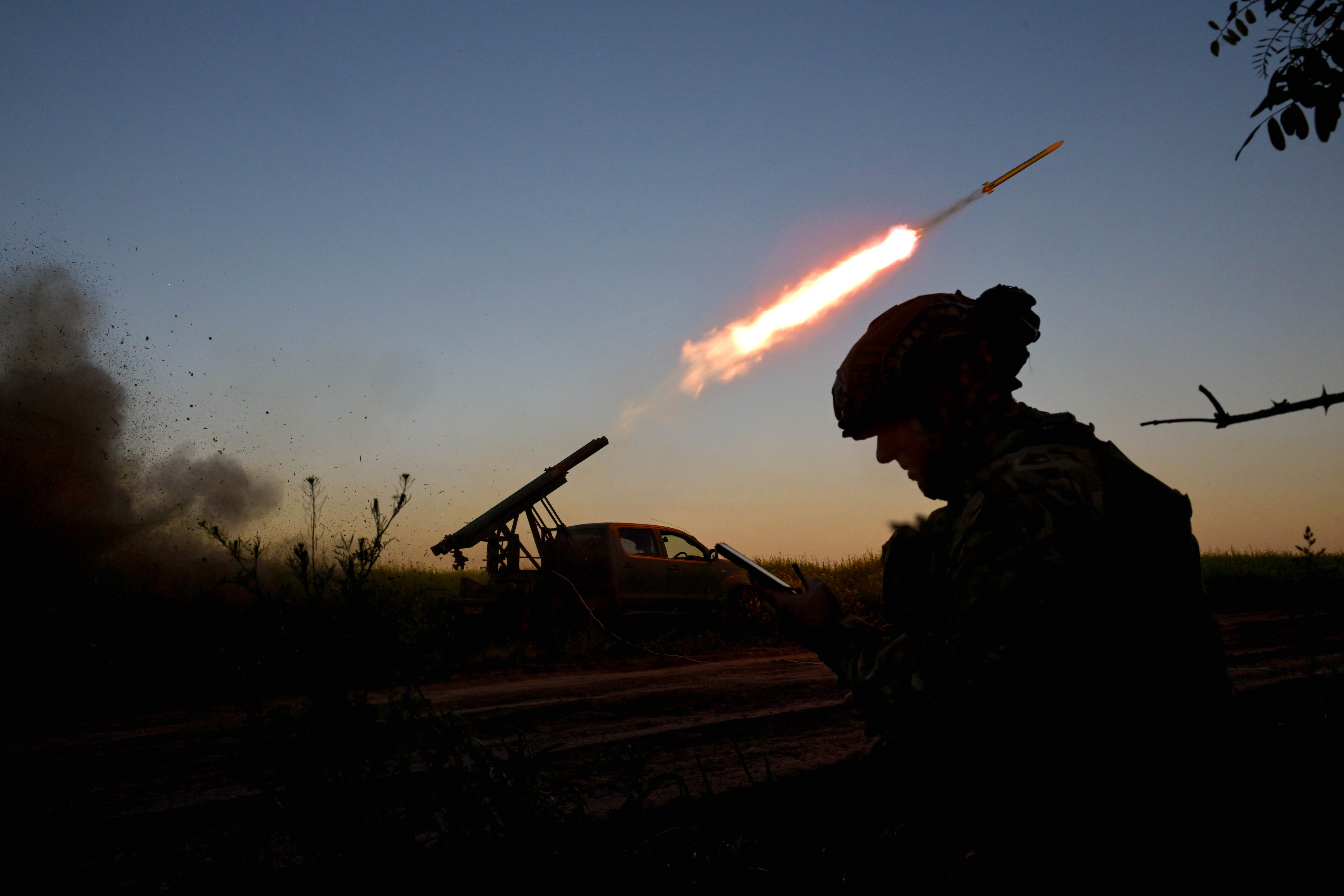
- An intensification of the Russia–Ukraine war, caused by expanding attacks on each side’s critical infrastructure and population centers
- U.S. military operations targeting transnational criminal groups escalate to direct strikes in Venezuela, destabilizing the Maduro government
- Growing political violence and popular unrest in the United States, exacerbated by heightened political antagonism and domestic security deployments
Moderate Likelihood; High Impact
- Renewed armed conflict between Iran and Israel, caused by Iranian efforts to reconstitute its nuclear program and rebuild its regional network of anti-Israel proxy groups
- A state or nonstate entity undertakes a highly disruptive, artificial intelligence–enabled cyberattack on U.S. critical infrastructure
- Intensified military, economic, and political pressure by China on Taiwan precipitates a severe cross-strait crisis involving other countries in the region and the United States
- Armed clashes between Russia and one or more NATO member countries, precipitated by increasing Russian provocations toward European states
- A resumption of North Korean nuclear weapons tests heightens tensions on the Korean Peninsula, triggering an armed confrontation involving other regional powers and the United States
Tier II
High Likelihood; Low Impact
- An escalation of the civil war in Sudan leads to further mass atrocities, civilian displacement, and spillover violence in neighboring countries
- Violent clashes between armed groups and security forces escalate in Haiti, aggravated by political dysfunction and the failure of international stabilization efforts
- Further election delays in South Sudan trigger renewed fighting between armed ethnic and political factions, destabilizing the central government

Visit the “Global Conflict Tracker” to learn more about ongoing conflicts around the world.
Moderate Likelihood; Moderate Impact
- The withdrawal of U.S. security assistance from Somalia leads to increased terrorist attacks and expanded territorial control by Al-Shabaab and ISIS
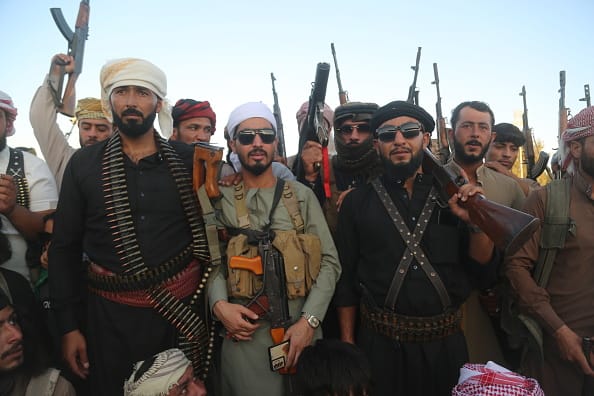
- Houthi attacks on Israel and international shipping provoke retaliatory actions that further degrade state capacity and deepen the humanitarian crisis in Yemen
- Failed efforts to disarm Hezbollah and continued Israeli military strikes in Lebanon destabilize the central government and ignite a wider sectarian conflict
- Growing sectarian violence and a resurgence of ISIS in Syria, exacerbated by Israeli and Turkish military interventions, weaken the central government and accelerate state fragmentation
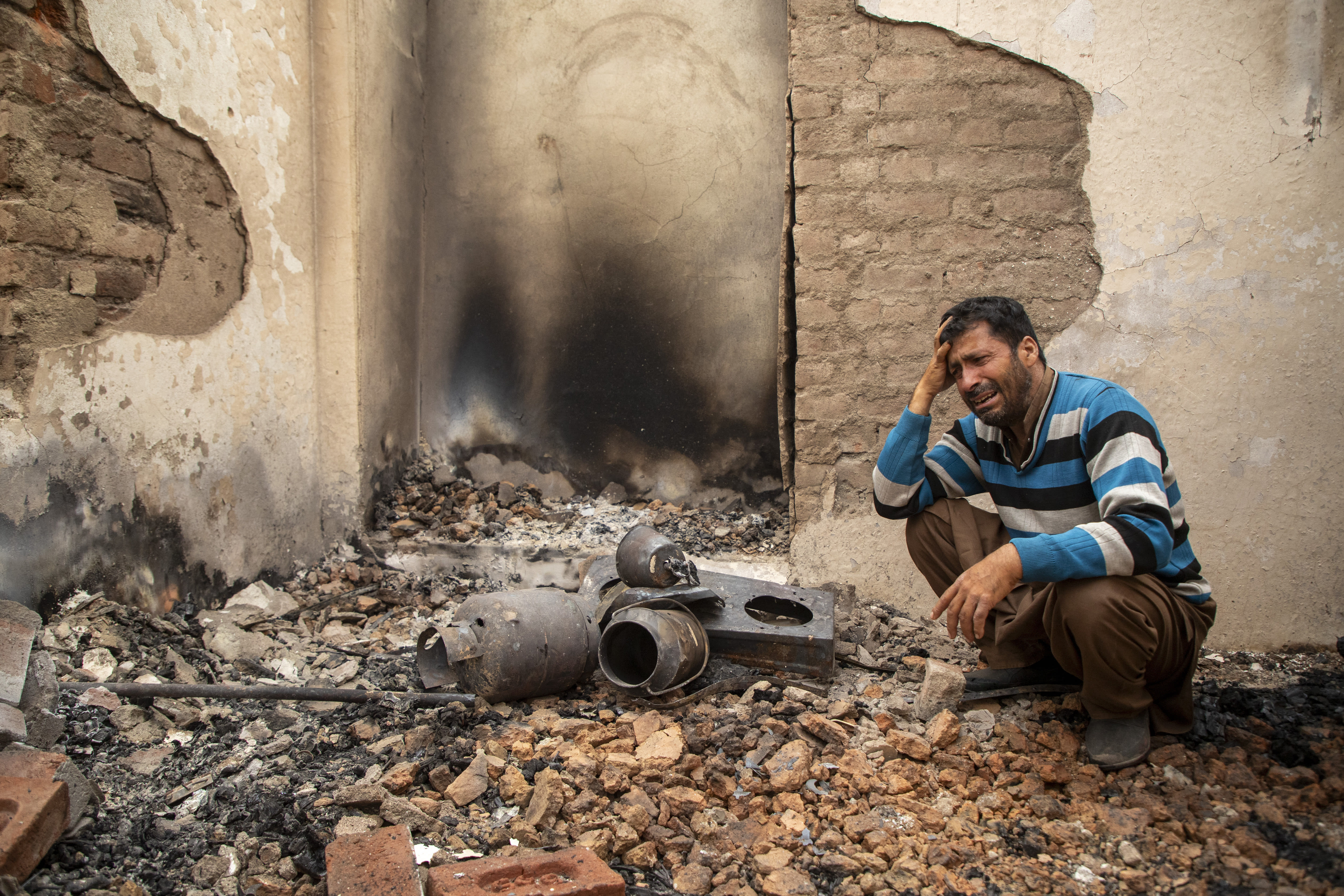
- Renewed armed conflict between India and Pakistan due to heightened terrorist activity and repression in Indian-administered Kashmir
Low Likelihood; High Impact
- Heightened concerns in the United States over illicit drug production and trafficking by transnational criminal groups lead to direct U.S. military strikes in Mexico
- Aggressive Chinese actions in the South China Sea, especially toward the Philippines, lead to an armed confrontation involving China, the United States, and U.S. allies

Fildor Pq Egeder/Reuters

Luis Tato/AFP via Getty Images
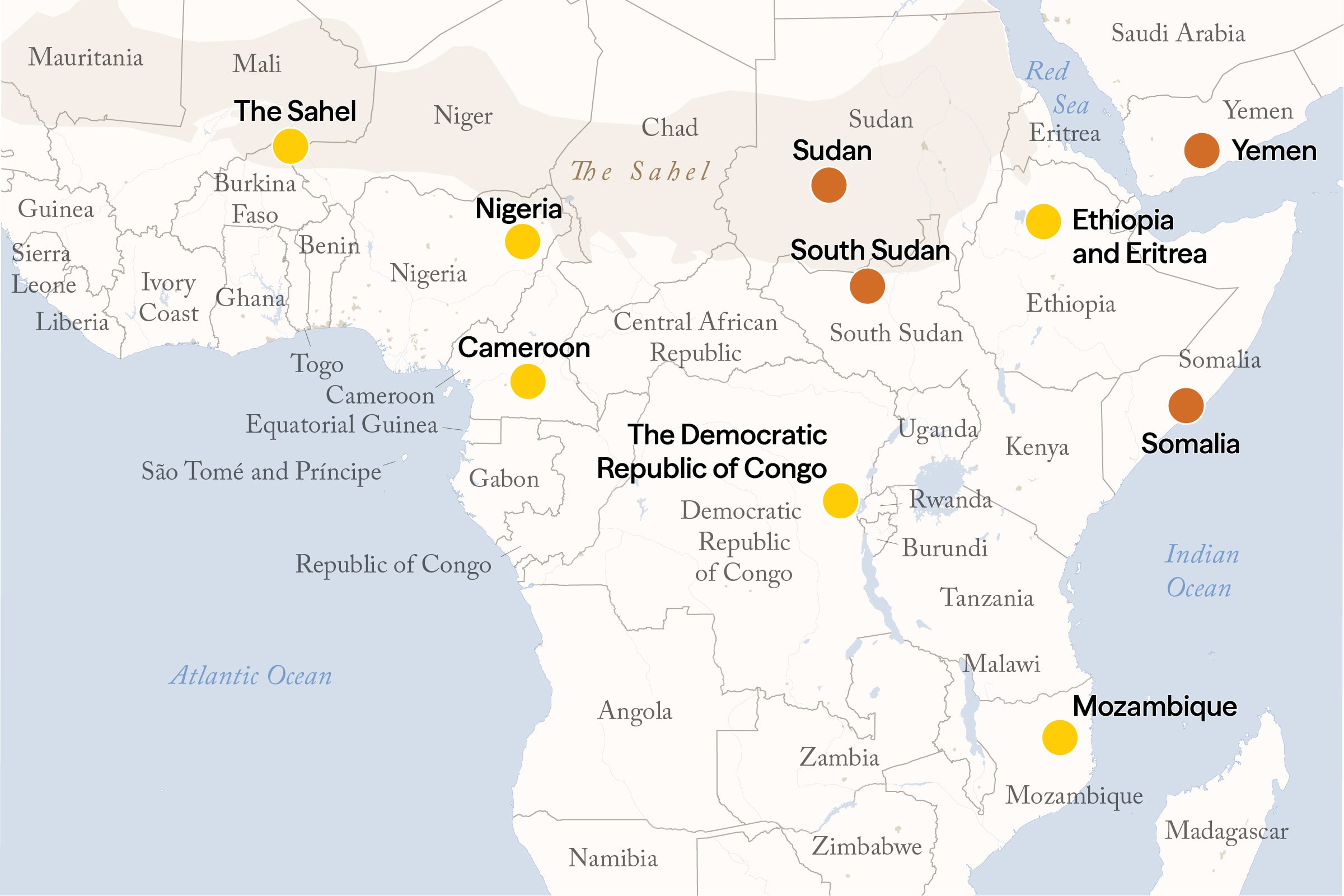
Moderate Likelihood; Low Impact
- Growing insurgencies across the Sahel (especially in Mali) exacerbate regional instability and human suffering
- Heightened Islamist terrorism and persistent state weakness in northeastern Nigeria increase nationwide insecurity and political instability
- Ethnic and political conflict over territory and natural resources intensifies between the Democratic Republic of Congo and armed groups, including Rwanda-backed militias
- Political and religious violence grows in Bangladesh, aggravated by the postponement of national elections and a worsening governance crisis
- Intensified criminal activity and conflict between the military junta and armed groups in Myanmar accelerate state collapse and increase civilian displacement, further exacerbating regional tensions
- Rising criminal violence and political repression in Ecuador increase civilian casualties and popular unrest
- Armed clashes between the Ethiopian military and Eritrea-backed militias, aggravated by Ethiopia’s efforts to gain Red Sea port access, reignite war in the border region
- The insurgency in northern Mozambique intensifies, causing widespread civilian casualties and accelerating displacement
- Renewed armed conflict between Afghanistan and Pakistan, triggered by resurgent cross-border militant attacks
- Political unrest and strengthening insurgencies in northern and western Cameroon destabilize the central government and lead to wider civil conflict
Other Noted Concerns
Although the survey was limited to thirty contingencies, government officials and foreign policy experts had the opportunity to suggest additional potential crises that they believe warrant attention. The following additional contingencies were proposed by several survey respondents:
- Increased Chinese and Russian military activities in the Arctic trigger an armed confrontation involving the United States or other NATO allies
- Renewed hostilities over unresolved territorial claims between Armenia and Azerbaijan draw in Turkey and other regional powers
- Resurgent border clashes between Cambodia and Thailand lead to a worsened refugee crisis and regional political instability
- Tensions between China and Japan over the sovereignty of the Senkaku/Diaoyu Islands, aggravated by disputes over the status of Taiwan, lead to armed clashes in the East China Sea
- Growing armed group activity and political polarization in Colombia, compounded by instability and criminal violence in Venezuela, further derail Colombia’s peace process and lead to resurgent civil war
- An increase in ethnic violence and political instability in the western Balkans triggers an armed confrontation necessitating foreign intervention
Last year’s unprecedented level of anxiety about the rising risk of violent conflict in the world remains undiminished.
- Last year’s unprecedented level of anxiety about the rising risk of violent conflict in the world remains undiminished. Once more, five contingencies are rated as high-likelihood, high-impact events. Also, of the thirty contingencies surveyed, twenty-eight were again judged to be either highly or moderately likely to occur in the next twelve months. Seventeen of the contingencies, moreover, would have a high or moderate impact on U.S. interests, according to survey respondents.
- This year, the thirty contingencies are spread evenly across the three tiers of relative priority. Although much of the world is represented in the 2026 PPS, the Middle East continues to figure prominently in the top-ranked concerns. Six Middle Eastern conflicts are rated as either Tier I or Tier II priorities, with each involving Israel to some degree. However, the largest number of contingencies (nine) involve African countries. Although six of them are assessed to be Tier III priorities, the risk of escalating war in Sudan was judged as the most likely to occur in 2026 among all the PPS contingencies surveyed.
- While several 2025 Tier I contingencies remain comparably ranked in 2026 (Gaza, Ukraine, Iran-Israel, and a cyberattack on the United States), one rose in the rankings to Tier I (North Korea) whereas four fell to Tier II (Haiti, Lebanon, Mexico, and the South China Sea). Notably, the possibility of growing political violence and popular unrest in the United States—the leading risk in the 2024 survey—is once again a high-likelihood, high-impact contingency after being rated as moderately likely to occur in the 2025 PPS.
- As has been true for the last several years, the risk of great power war persists. This year, contingencies such as a crisis in the Taiwan Strait and Russia-NATO clashes are given an even chance of occurring in 2026 and are rated as high impact due to their potential to draw the United States into a direct military conflict with China or Russia. The risk of a conflict in the South China Sea carries similar potential risk but was rated as having a low likelihood for 2026.

Additional observations warrant mention:
- Six contingencies from the 2025 survey were not included in the 2026 survey. For the first time, the possibility of widespread conflict in Afghanistan did not appear in a PPS survey, though the risk of further cross-border clashes with Pakistan was included. Due to a promising disarmament process involving the main Kurdish armed group in Turkey, the related contingency was also eliminated from the 2026 survey. Likewise, civil conflicts in Ethiopia and Libya, as well as the possibility of Russian provocations against non-NATO countries in eastern Europe, did not merit inclusion. The risk of armed confrontation in the western Balkans is listed as an “Other Noted Concern” this year.
- Six new contingencies were included in the 2026 survey. By far the most prominent new addition is the possibility of direct U.S. military action against Venezuela, which was ranked as a high-likelihood, high-impact contingency. Due to the growing number of provocations by Russia against NATO countries in 2025, the potential for those tensions to escalate into an armed clash was judged to be sufficiently plausible for inclusion in the 2026 survey. Following a year of dramatic political change and sectarian violence in Syria, resurgent civil war in that country was also added. South Sudan, a 2025 “Other Noted Concern,” likewise returned to the survey after another year of election delays and factional violence. Rising violence and unrest in Ecuador and growing insurgent activity and political instability in Cameroon were new additions as well.
- Eight contingencies in the 2025 survey were revised significantly for 2026. The Ukraine war–related contingency is now focused on the risk that Russia and Ukraine will intensify attacks on each other’s infrastructure and cities. The possibility of renewed fighting between Iran and Israel reflects new concerns following the June 2025 twelve-day war. Similarly, the prospect of direct U.S. strikes targeting criminal groups in Mexico accounts for the Trump administration’s heightened concern over the illicit drug trade. The Sudan contingency emphasizes the growing risk of mass atrocities, and the Somalia contingency addresses the potential U.S. withdrawal of security assistance and a resulting increase in terrorism. The risk of war between Ethiopia and its neighbors focuses more narrowly on conflict with Eritrea and Eritrea-backed groups in the border region. The contingency regarding Yemen centers on the deepening internal crisis, and the Lebanon contingency centers on the government’s struggle to disarm Hezbollah.

Gladjimi Balisage/U.S. Navy/Handout via Reuters

Korean Central News Agency via Reuters
Opportunities for Conflict Prevention and Resolution
In this year’s survey, 336 experts suggested dozens of contingencies under two broad categories: conflicts in which the United States has exceptional leverage over one or more parties and conflicts for which the United States can partner with other countries and international institutions to bolster peace efforts.
Respondents overwhelmingly identified these contingencies as the best opportunities for the United States to use its influence to mitigate conflict:
| Contingency | Priority |
|---|---|
| An intensification of the Russia-Ukraine war, caused by expanding attacks on each side’s critical infrastructure and population centers | Tier I Likelihood: High Impact: High 112 experts highlighted this opportunity for preventive action |
| Renewed fighting in the Gaza Strip, triggered by increasing clashes between Hamas militants and Israeli security forces, deepens the humanitarian crisis and exacerbates regional instability | Tier I Likelihood: High Impact: High 49 experts highlighted this opportunity for preventive action |
| Intensified military, economic, and political pressure by China on Taiwan precipitates a severe cross-strait crisis involving other countries in the region and the United States | Tier I Likelihood: Moderate Impact: High 31 experts highlighted this opportunity for preventive action |
| Increased conflict between Israeli security forces and Palestinians in the West Bank over Israeli settlement construction, Palestinian political rights, and the war in Gaza | Tier I Likelihood: High Impact: High 20 experts highlighted this opportunity for preventive action |
| A resumption of North Korean nuclear weapons tests heightens tensions on the Korean Peninsula, triggering an armed confrontation involving other regional powers and the United States | Tier I Likelihood: Moderate Impact: High 10 experts highlighted this opportunity for preventive action |
Abdulrhman El Ali/Anadolu via Getty Images
Experts identified these contingencies as ripe opportunities for the United States to increase its support for international efforts toward peace:
| Contingency | Priority |
|---|---|
| An escalation of the civil war in Sudan leads to further mass atrocities, civilian displacement, and spillover violence in neighboring countries | Tier II Likelihood: High Impact: Low 30 experts highlighted this opportunity for preventive action |
| Growing sectarian violence and a resurgence of ISIS in Syria, exacerbated by Israeli and Turkish military interventions, weaken the central government and accelerate state fragmentation | Tier II Likelihood: Moderate Impact: Moderate 17 experts highlighted this opportunity for preventive action |
| Violent clashes between armed groups and security forces escalate in Haiti, aggravated by political dysfunction and the failure of international stabilization efforts | Tier II Likelihood: High Impact: Low 15 experts highlighted this opportunity for preventive action |
| Ethnic and political conflict over territory and natural resources intensifies between the Democratic Republic of Congo and armed groups, including Rwanda-backed militias | Tier III Likelihood: Moderate Impact: Low 8 experts highlighted this opportunity for preventive action |
The Preventive Priorities Survey was made possible by a generous grant from the Carnegie Corporation of New York. The statements made and views expressed are solely the responsibility of the Center for Preventive Action.
About the Center for Preventive Action
The Center for Preventive Action seeks to help prevent, defuse, or resolve deadly conflicts around the world and to expand the body of knowledge on conflict prevention. It does so by creating a forum in which representatives of governments, international organizations, nongovernmental organizations, corporations, and civil society can gather to develop operational and timely strategies for promoting peace in specific conflict situations. The center focuses on conflicts in countries or regions that affect U.S. interests, but may be otherwise overlooked; where prevention appears possible; and when the resources of the Council on Foreign Relations can make a difference.t
Source link
